SEO is changing in 2025, pushing content to be more user-friendly, honest, and, well, human. AI-powered search experiences, such as Google’s SGE, are evolving and poised to challenge SEO best practices.
While AI tools such as ChatGPT have contributed to a flood of generic AI content on the web, search engines now favor conversational language to avoid spam.
There is a lot going on in search engine optimization this year. With search algorithms constantly evolving, generative AI developing, and Google upping the standard for rank-worthy material.
What we all want to know now is, what will SEO look like in 2025. What will be the most significant issues, how will they impact business, and how can we prepare?
We did some research.
Before diving into the current SEO trends and ranking variables, let’s address a common question…
Is SEO gone by 2025?
No, SEO is still alive and well in 2025. However, things aren’t as they used to be.
The debate about whether SEO is dead or alive is as old as the technique itself. Google has made countless adjustments to SEO over the years, and they are unlikely to stop anytime soon.
The development of AI has made change the only constant. However, SEO is not dying; rather, it is developing, as it has always and will continue to do.
To maintain your ranks in 2025, you must be prepared to alter your SEO strategy to stay up with the constant algorithm changes. For businesses that wish to flourish, timeliness is more vital than ever. Staying in your comfort zone and clinging to what previously worked will not get you anywhere this year.
SEO is and will continue to be important for businesses seeking to increase traffic, leads, brand awareness, and, ultimately, revenue. SEO will be relevant as long as people use search engines to find the information they need.
The fact is that if your company ranks first in Google’s organic search, you will receive 27% of all clicks – which is a significant amount.
With that said, we can anticipate corporations to continue to invest in SEO techniques in order to develop their businesses.
Will businesses spend more or less on SEO in 2025?
SEO is gaining traction in 2025, with an increasing number of businesses trying to expand their operations online. Even if the evolving algorithms pose challenges, firms do not appear to be backing down. Instead, they’re stepping up their SEO efforts to outperform competition by keeping and enhancing their ranks.
New tools emerge almost every day as a result of AI, providing organizations with limitless opportunity to refine their strategy. We may expect corporations to invest more in SEO tools in the future year in order to grow their efforts and maintain their competitive advantage.
Top benefits of continuing to invest in SEO in 2025
1. Brand Awareness: Topping the search engine results pages (SERPs) establishes your business as an industry leader. Prospects get more familiar with your brand when they see it featured for relevant keywords on a consistent basis.
2. Qualified leads: SEO enables you to target keywords relevant to your business, attracting customers looking for items or services similar to yours. As a result, the traffic created by SEO is more focused, resulting in higher-quality leads and sales.
3. Cost-effective: SEO is often more cost-effective than traditional advertising strategies. While there may be some upfront costs connected with SEO initiatives, such as employing an SEO specialist or purchasing tools, the long-term benefits of increased organic traffic and lead creation frequently outweigh the initial expenditure.
4. Long-term results: Unlike paid advertising, which stops producing traffic once you stop paying for it, the benefits of SEO can last a long time. By regularly investing in SEO and optimizing your website, you can reap the long-term benefits of improved search engine ranks and organic visitors.
So, certainly, corporations will likely continue to spend in SEO in 2025. But in order to succeed, they must do things differently.
Let us break down how to perform SEO in 2025.
5 significant SEO trends for 2025 (as well as how to prepare for challenges)
A lot has transpired since AI first joined the SEO sector, and we won’t be able to cover everything in one essay. However, here are five SEO trends that all businesses should be aware of in 2025, along with advice on how to prepare for them.
1. Google is prioritizing high-quality content
In 2023, AI began influencing content development and search engines. Google’s goal is to provide consumers with content that is engaging, trustworthy, and relevant to their search intent.
With the internet overflowing with AI-generated information, high-quality content is becoming increasingly scarce, and Google’s search algorithm is growing more stringent in its definition of rankable content. Following AI, we can see a greater emphasis on user intent and answering specific target audience inquiries.
However, Google is not the only one who is fed up with low-quality content. Over half (57%) of B2B sellers consider the marketing team’s content generic and unhelpful.
How does this affect B2B marketing and sales content in 2025? Among other reasons, this means that we must exercise extreme caution when employing AI to generate content.
AI is excellent for scaling content output, but not if quality is compromised. The content strategy must continue to prioritize user experience.
The most recent Google algorithm updates also indicate that human-like content will be preferred over AI-generated items.
So, while AI for content production is still growing, we are also seeing an increase in need for human SEO writers.
If you want to create high-quality content (for both readers and search engines), simply employ AI as an editor rather than a writer.
2. Google’s search generative experience (SGE) is on the rise.
Google’s Search Generative Experience (SGE) is becoming a reality, gradually but surely affecting user behavior by placing AI-generated results at the top of SERPs.
The purpose of SGE is to improve user experience by providing clear answers to search queries. It also provides graphics and suggestions for prompts to help you continue your search.
Even though SGE is not a chatbot, it functions more like a conversational AI assistant than a search engine. This is presumably how we will approach SERPs in the future. However, SGE has yet to fully arrive. It will take some time before it fully prevails and interrupts the search.
To prepare for SGI, we can develop content that is easy for it to grasp, which means that:
a) Answers user queries directly: SGE is focused about getting to the point quickly, just like its customers.
b) Contains bullet lists: Using lists and breaking your material into sections helps make SGE easier to understand.
c) Covers a whole topic: SGE will direct viewers to other search results that cover the same or similar topics, so don’t overlook content clusters.
d)Has nice images: SGE will display images that are relevant to the search query; for example, infographics can be useful.
However, we do not know what effect SGE will have on user behavior; at this time, we can only speculate. Maybe it will disrupt traditional search, maybe not.
Until we learn more, it’s preferable to focus on developing high-quality, user-centric SEO content.
3. Topical authority is becoming more significant
Developing topical authority entails becoming the go-to information source for a given issue, which most B2B organizations aspire for. However, developing topical authority is not only beneficial for thought leadership, but it is also becoming a more essential ranking element.
Content clusters with well-structured internal linking make it simple for users (and Google) to access relevant content based on their search query. Establishing topical authority is also consistent with Google’s E-E-A-T principles.
When generating material for topical authority, you must consider:
a) Your target audience: Determine your target audience’s needs, preferences, and pain areas. This information will assist you in addressing subjects that are relevant to your target audience.
b) Regular publishing: Regular publishing is essential for establishing topical authority. Regularly post fresh, relevant information to keep your readers interested and demonstrate your dedication to your chosen topic.
c) Optimizing for search engines: Use SEO best practices to guarantee that your material is easily discovered by search engines. This includes optimizing your website’s structure, utilizing relevant keywords, and obtaining high-quality backlinks.
If you continuously deliver valuable and dependable material, readers (and Google) will perceive you as an expert in your subject.
4. Creating fresh contents is less important than regularly updating existing content
To maintain your rankings in 2025, it is more crucial than ever to continuously refresh your content. Google wants relevant, fresh material to dominate the SERPs, which keeps content providers on their toes.
If you want to keep your audience engaged, you must maintain a high level of content quality. This includes continuously updating and revising your content to ensure that it remains interesting and relevant to consumers and search engines.
With so much information being released every day, competition is increasing. You cannot risk your content becoming out of date and losing rankings. Facts and insights are continuously evolving and changing, so if you want to be the go-to source for knowledge, you must keep current.
5. There is an increase in zero-click searches
Recently, there has been an upsurge in zero-click searches, in which consumers do not click on any search results.
This is likely due to Google’s increasing provision of vital information within the SERPs, which visitors can access without having to click any further.
When users can access the information they’re looking for immediately from the SERP, there’s no reason to click. In other words, it is growing more difficult for businesses to draw visitors to their websites.
Zero-click searches are expected to grow much more this year, but you may prepare by:
a) Building thought leadership: Positioning your company as an industry authority can increase the likelihood that users will click on your website when it appears in the search results.
b) Optimize for featured snippets: Aim to rank as a featured snippet for search queries with no clicks. Optimizing for featured snippets entails creating information in succinct, helpful formats that directly answer frequently asked queries.
c) Diversify your marketing channels: SEO is not the only technique to drive visitors; integrate other channels in your digital marketing strategy. Examples include social networking platforms, forums, email marketing, and industry-specific news sites.
Last but not least, you should strive to build a loyal following that views your brand as the go-to source for knowledge.
If you succeed, you will ensure that people think of you first when they need to locate something or solve an issue, rather than relying just on Google. This manner, you may lessen your reliance on Google as a key source of traffic while increasing.
Conclusion
With that said, SEO is not dead; rather, it is evolving at a quick speed, and businesses must stay up with the changes in order to maintain and enhance their ranks.
As previously discussed, numerous significant trends are affecting the SEO environment, including the rise of AI-powered search experiences and the growing relevance of user-centricity and human touch in content creation.
To prepare for these trends, businesses must take an agile approach, staying current on advancements in AI technology and exploiting it to scale without losing quality or user experience.
The answer to the question ‘How to master SEO in 2025?’ is agility, along with a firm commitment to providing excellent value to users.
Regarding SEO…
What if you could convert anonymous traffic into real firm names, allowing you to find highly qualified leads? With Ayraphics , you can see which firms are visiting your website, when they are visiting, and which pages they are connecting with.
For businesses of all sizes, having a strong online presence is essential in this current digital age. In order to increase the visibility of your website and attract organic traffic, search engine optimization, or SEO, is essential. However, choosing the SEO company in Jaipur might be difficult. With numerous options available, it’s essential to make an informed decision.
Here are some key factors to consider when selecting the best SEO company
1. Experience and Expertise:
Years of Experience: Look for a company with a proven track record and substantial experience in the SEO industry. Experienced professionals possess the knowledge and skills to navigate the complexities of search engine algorithms.
Industry Specialization: Consider if the company has worked with businesses in your specific industry. Industry-specific knowledge can be invaluable in tailoring SEO strategies to your unique needs.
2. Transparent Communication:
Clear Communication: A reputable SEO company will maintain open and transparent communication with you throughout the engagement. They should provide regular updates on progress, challenges, and strategies.
Realistic Expectations: Avoid companies that promise unrealistic results or guarantee top rankings. A good SEO company will set realistic expectations and focus on long-term sustainable growth.
3. Comprehensive SEO Services:
On-Page Optimization: This involves optimizing website content, meta tags, and other on-page elements to improve search engine rankings.
Off-Page Optimization: This focuses on building high-quality backlinks to your website from other reputable websites.
Technical SEO: This involves optimizing website technical aspects like site speed, mobile-friendliness, and XML sitemaps to enhance search engine crawling and indexing.
Content Marketing: Creating high-quality, relevant content can significantly boost your website’s visibility and attract organic traffic.
4. Ethical Practices:
White-Hat SEO: Ensure that the company follows ethical SEO practices. Avoid companies that use black-hat techniques, as they can harm your website’s reputation and lead to penalties from search engines.
Transparent Reporting: The company should provide detailed reports on the performance of your SEO campaign, including key metrics like website traffic, rankings, and conversions.
5. Client Testimonials and Reviews:
Client Feedback: Check online reviews and testimonials from previous clients to gauge the company’s reputation and the quality of their services.
Case Studies: Analyze case studies to understand the company’s approach and the results they have achieved for other businesses.
6. Pricing and Packages:
Transparent Pricing: A reputable SEO company will provide transparent pricing information and avoid hidden costs.
Value for Money: Consider the value you’re getting for the price. While it’s important to find an affordable option, don’t compromise on quality.
7. Local SEO Expertise:
Local SEO Focus: If your business targets a specific geographic area, ensure the company has expertise in local SEO. This involves optimizing your website for local search queries and Google My Business.
By carefully considering these factors, you can select the right SEO company in Jaipur to elevate your online presence and achieve your business goals.
Why Choose Ayraphics as Your SEO Partner in Jaipur?
Ayraphics is your trusted SEO company in Jaipur. With years of experience and a team of skilled professionals, we’re committed to delivering exceptional results. Our comprehensive SEO services cover on-page, off-page, technical, and local SEO. We believe in transparent communication, keeping you informed about the progress of your campaign. Our ethical approach ensures sustainable growth and avoids penalties.
By choosing Ayraphics, you’re investing in a partnership that prioritizes your business goals. We tailor our strategies to your specific needs, providing dedicated support throughout the process. Let’s work together to elevate your online presence and drive sustainable growth.
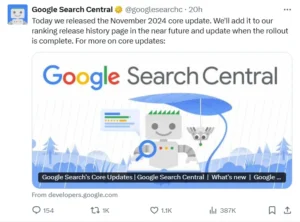
Google has released its latest broad core algorithm update for November 2024. This update continues Google’s refinement of search systems to enhance the quality of results.
“Today we released the November 2024 core update. We’ll add it to our ranking release history page in the near future and update when the rollout is complete.”
An explanation of the core updates
Google makes these algorithmic updates multiple times a year with the goal of enhancing the search experience by reassessing the way information is sorted and ranked.
Core updates have a global impact on search results in all languages and locations, in contrast to customized updates.
Things You Need to Know
Most of websites might not notice major changes from core updates, according to Google’s documentation. However, certain websites may see noticeable changes in traffic and search engine results.
Google advises website owners who see changes in their rankings to:
Wait for the update’s completion before assessing its effects.
Examine Search Console traffic data before and after the change.
Pages that are experiencing significant position declines should receive extra attention, especially those that are dropping more than 20 positions.
Utilize Google’s self-assessment criteria to evaluate the quality of the material.
Prioritize long-term enhancements over temporary solutions.
Recovery and Response
Google underlines that although its algorithms learn and verify changes, recovery for sites impacted by the update could take several months.
Ranking recoveries are not always the consequence of specific improvements. Google highlights that because user expectations are constantly changing and web material is constantly being updated, search results are dynamic.
Google’s Search Status Dashboard allows site owners to track the rollout’s progress. Similar to past core updates, Google is anticipated to make an announcement at the conclusion of the rollout, which normally takes two weeks.
In today’s digital age, having a strong online presence is essential for the success of any business. A website acts as the digital storefront, often creating the first impression for potential customers. However, building and maintaining a website that stands out requires expertise, time, and attention to detail. This is where a website development company steps in. Their role goes beyond just building websites—they ensure that your online platform is optimized, secure, and tailored to meet your business objectives.
Key roles and importance of a website development company
1. Custom Website Design
A professional website development company doesn’t rely on cookie-cutter templates. Instead, they create customized designs that reflect your brand’s identity, vision, and goals. A well-designed, user-friendly website helps in enhancing user experience, leading to increased engagement, higher conversion rates, and long-term customer retention.
Benefits of Custom Website Design:
Unique Branding: A custom design ensures your website stands out from competitors.
Targeted User Experience: The design is tailored to your target audience’s preferences.
Flexibility: Custom designs allow for future scalability and updates.
2. Responsive Web Design
A website development company ensures that your website is fully responsive, meaning it works seamlessly across all devices—desktops, laptops, tablets, and smartphones. With the majority of web traffic now coming from mobile devices, a responsive design is crucial for providing a smooth user experience and improving your search engine rankings.
Importance of Responsiveness:
Improved SEO: Google prioritizes mobile-friendly websites.
Better User Experience: A responsive site adapts to any screen size, reducing bounce rates.
Increased Engagement: Mobile users are more likely to engage with a responsive site.
3. Search Engine Optimization (SEO)
A website development company not only builds a visually appealing site but also ensures it’s optimized for search engines. SEO involves various practices such as optimizing website speed, incorporating relevant keywords, and ensuring mobile-friendliness. A well-optimized website is more likely to rank higher on search engines, driving organic traffic and increasing visibility.
How SEO Helps Your Website:
Higher Search Engine Rankings: Proper SEO strategies help your site rank higher on Google and other search engines.
Increased Organic Traffic: With better rankings, your website attracts more visitors without relying heavily on paid ads.
Enhanced User Experience: Fast loading times and intuitive navigation improve the overall user experience.
4. E-Commerce Development
For businesses looking to sell products or services online, e-commerce functionality is vital. A website development company ensures that your e-commerce platform is secure, easy to navigate, and fully equipped with features like payment gateways, product catalogs, and customer account management.
Key Features of E-Commerce Development:
Secure Payment Integration: Ensuring safe transactions with SSL certification.
Product Management: Allowing easy updates to product listings, inventory, and pricing.
User-Friendly Checkout Process: Streamlined and intuitive checkout to reduce cart abandonment rates.
5. Content Management System (CMS) Integration
A CMS allows you to manage and update your website content without needing technical expertise. Website development companies often integrate CMS platforms like WordPress, Drupal, or Joomla, enabling you to update blogs, product listings, or service pages easily.
Advantages of a CMS:
Ease of Use: Non-technical users can make content updates without assistance.
SEO-Friendly: CMS platforms come with built-in tools to help optimize your site for search engines.
Scalability: You can add new features or pages as your business grows.
6. Website Maintenance and Support
Building a website is just the beginning. Regular updates, security patches, and performance optimizations are necessary to keep your site running smoothly. A website development company offers ongoing maintenance and support services to ensure that your website remains up-to-date, secure, and functional.
Why Maintenance Matters:
Security: Regular updates prevent vulnerabilities and protect against cyber threats.
Performance: Continuous monitoring ensures your website loads quickly and functions smoothly.
SEO Benefits: Search engines favor websites that are well-maintained and regularly updated.
7. Web Hosting and Domain Services
Most website development companies offer hosting and domain management services, ensuring that your website remains live, fast, and secure. They handle all the technical aspects of hosting, including server management, backups, and SSL certificates, so you can focus on your core business.
Hosting Benefits:
Reliability: Ensures your website stays online with minimal downtime.
Security: Secure hosting environments protect your data from cyber threats.
Speed: Fast loading times are crucial for both SEO and user experience.
8. Analytics and Performance Tracking
A website development company can also integrate tools like Google Analytics and other performance tracking software. These tools help you measure user behavior, track conversions, and optimize your website to achieve better results over time.
Benefits of Tracking:
Understanding User Behavior: Gain insights into how users interact with your website.
Optimizing Conversion Rates: Identify bottlenecks in the user journey and address them.
Measuring ROI: Track the effectiveness of your digital marketing efforts.
Conclusion: Why a Website Development Company is Essential
In the digital world, your website is the face of your brand. To ensure that your website is not just a functional online presence but also a powerful marketing tool, partnering with Ayraphicsfor professional website development is a smart move. From design to optimization, maintenance, and analytics, they offer end-to-end solutions that help your business grow online.
By investing in the expertise of a website development company, you’re not just getting a website—you’re getting a comprehensive platform that can attract visitors, convert leads, and grow your business.
Are you wondering why your competitors rank higher than you?
The secret to your competitors’ SEO success could be as simple as targeting the right keywords.
Because these terms are effective for your competitors, there’s a strong possibility they’ll be useful for you as well.
In this article, we’ll look at the most effective yet simple strategies to identify competitors’ keywords, allowing you to lead your own SEO approach and maybe surpass your competition in SERPs.
Benefits Of Competitor Keyword Analysis
Competitor keyword analysis involves identifying and studying the keywords that your competitors are targeting in their SEO and PPC campaigns. This process provides several benefits for your own digital marketing strategy:
1. Improved SEO Strategy
Identifying Gaps: Discovering keywords your competitors rank for that you are not targeting can reveal content gaps and opportunities.
Keyword Prioritization: Helps in prioritizing keywords based on the success and ranking of competitors, ensuring you focus on terms with the highest potential ROI.
2. Enhanced Content Creation
Content Ideas: Competitor keywords can inspire new content topics, ensuring your content strategy is both relevant and comprehensive.
Quality Improvement: Understanding the type and quality of content that ranks well can guide you in creating superior content.
3. Competitive Benchmarking
Performance Metrics: Helps in benchmarking your SEO and PPC performance against competitors to see where you stand.
Strategy Adjustment: Allows you to adjust your strategies in response to competitors’ tactics and performance.
4. Increased Organic Traffic
Higher Rankings: Targeting effective keywords that competitors rank for can help you improve your own search engine rankings.
Long-Tail Keywords: Helps in discovering long-tail keywords that might have less competition and higher conversion rates.
5. Strategic Planning
Long-Term Strategy: Provides data-driven insights that can inform your long-term SEO and content strategy.
Adapting to Changes: Keeps you informed about changes in competitor strategies and market conditions, allowing for agile adjustments.
By leveraging competitor keyword analysis, you can gain a competitive edge, improve your search engine visibility, and drive more targeted traffic to your site.
How To Identify Your Competitors’ Keywords
There are numerous approaches to identify keywords used by competitors in their content. Let’s analyse the advantages and disadvantages of the most common solutions.
1. Use Google Keyword Planner
Google Keyword Planner is a free Google service that allows you to discover competitors’ sponsored keywords.
Here is a list of the advantages this tool provides in terms of competitive keyword analysis.
There is no fee for access: Keyword Planner is free to use, making it an excellent choice for SEO beginners and organisations with restricted expenditures.
Core keyword data: The tool displays crucial SEO information such as search volume, competitiveness, and proposed bid rates for each identified phrase.
Keyword classification: Keyword Planner helps you to organise keywords into categories, which can be useful for designing tailored ad campaigns.
Historical data: The tool has four years’ worth of historical data available.
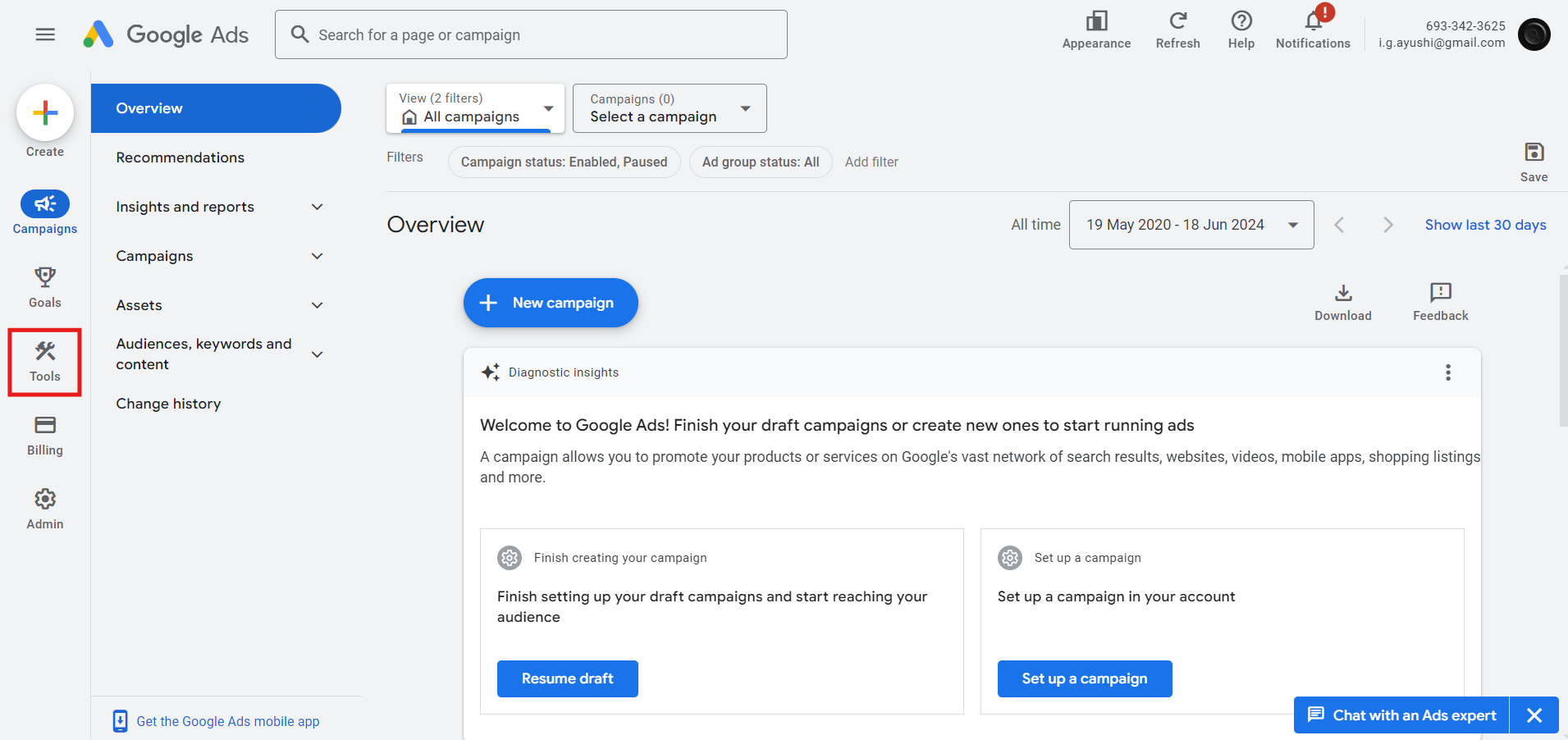
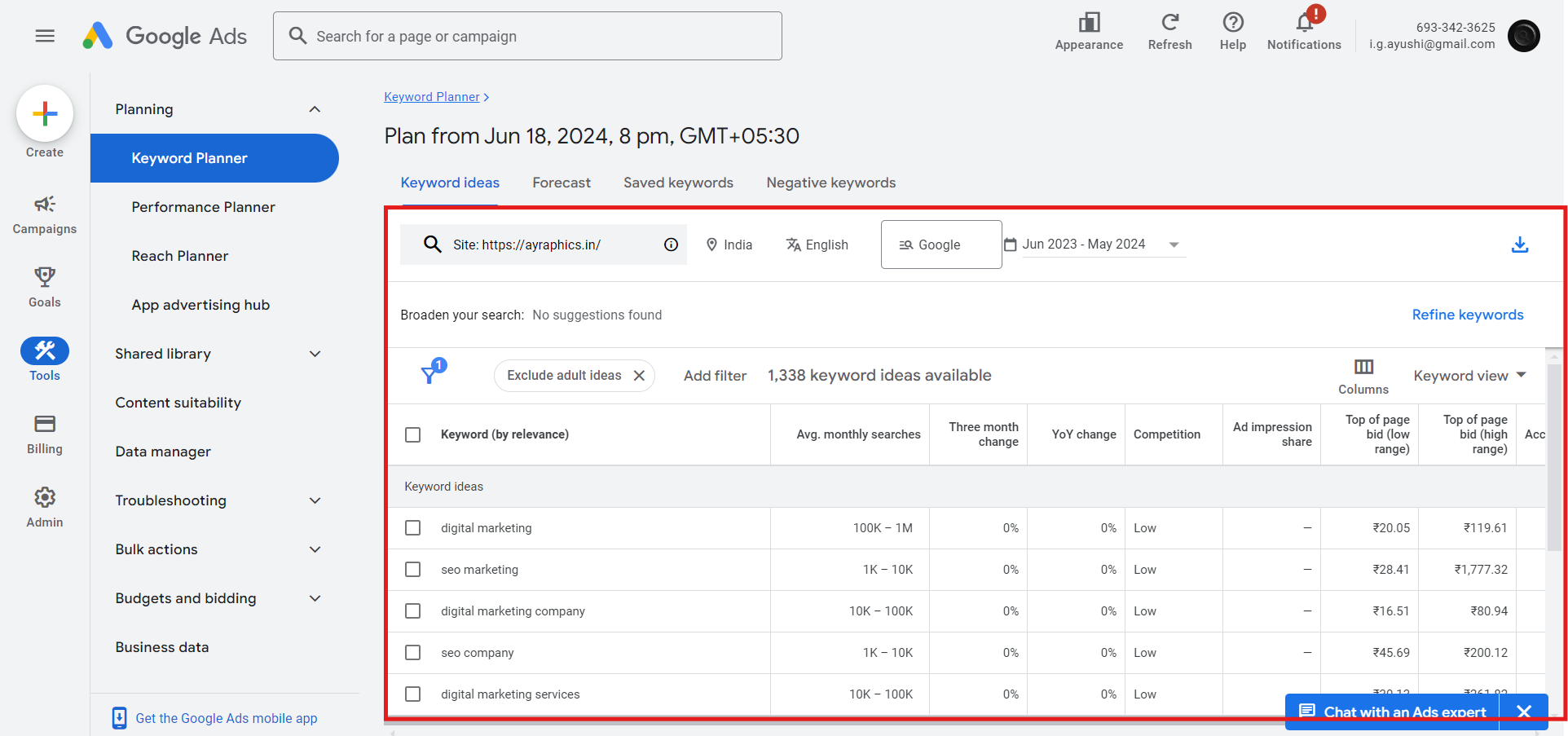
When you log into your Google Ads account, go to the Tools tab.
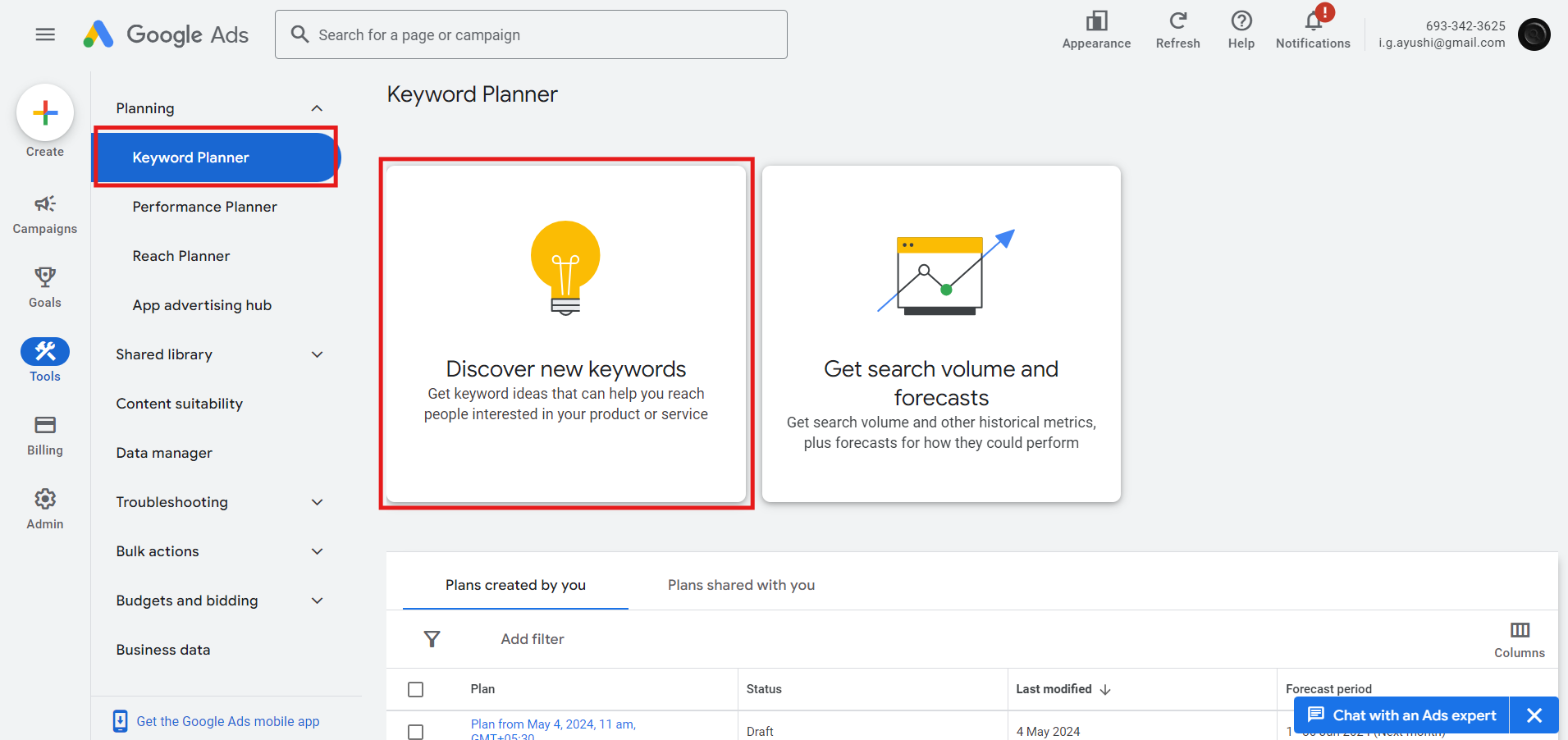
Now, click on the keyword planner and then the Discover new keywords option.
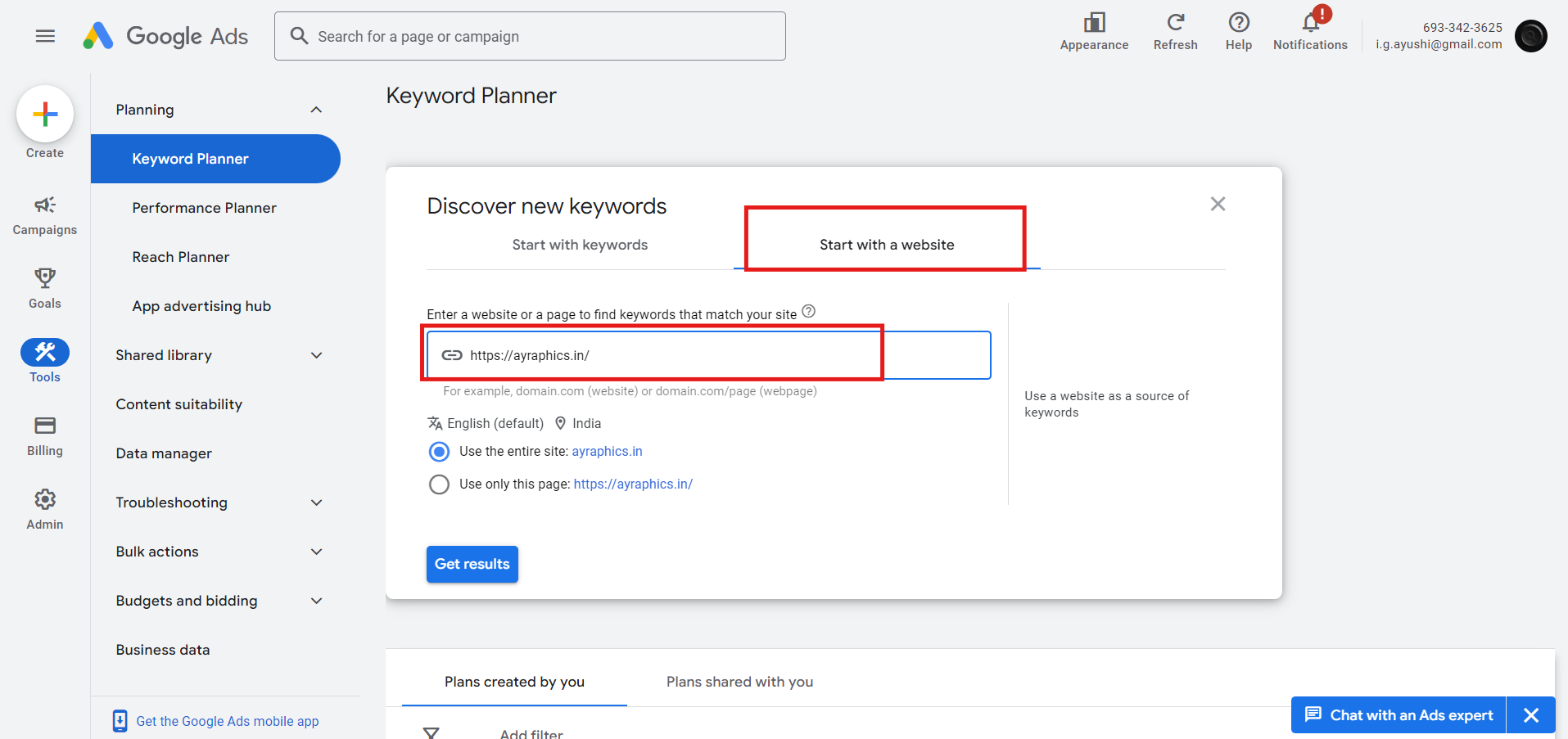
Now, Choose Start with a website option, then entering your competitor’s domain, region, and language. From there, you can pick whether to analyse the entire site (preferred for deeper insights) or just one URL.
And there you have it: a table of all the keywords used in your analysed website’s Google Ads campaigns.
2. Use SpyFu
SpyFu is a thorough SEO and PPC analysis tool designed with the intent of “spying” on competitors.
Its main advantages in terms of competition keyword analysis are as follows:
Database includes over 10 years of historical data: Although only available in the Professional plan, SpyFu provides long-term analytics for monitoring industry changes and adapting accordingly.
Keyword gap analysis: This tool allows you to easily compare your terms to those of your competitors based on parameters such as search volume, keyword difficulty, organic clicks, and so on.
Affordability: It is appropriate for enterprises with a limited budget.
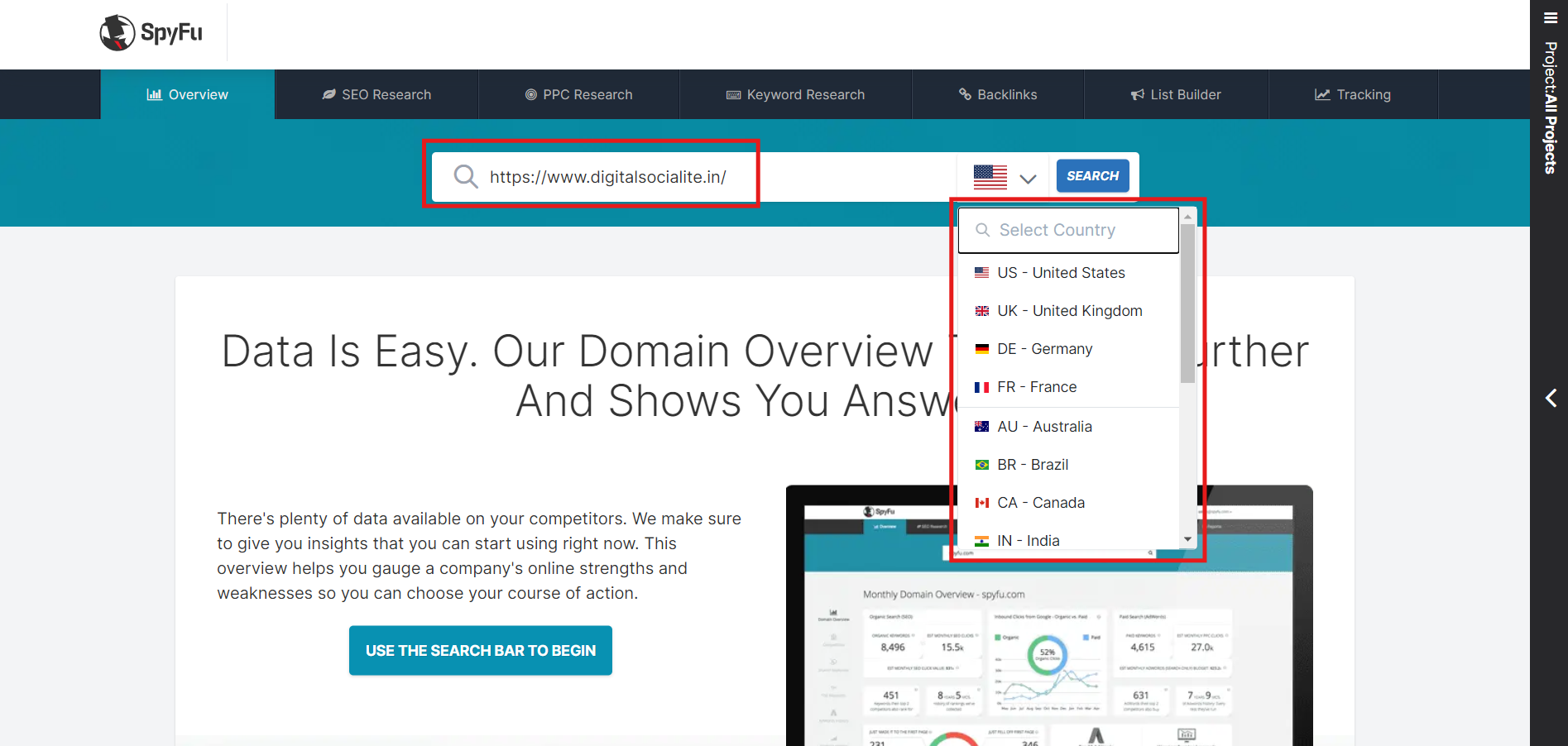
To access competitor data, simply go to their website and type your competition’s domain into the search bar, and select the region.
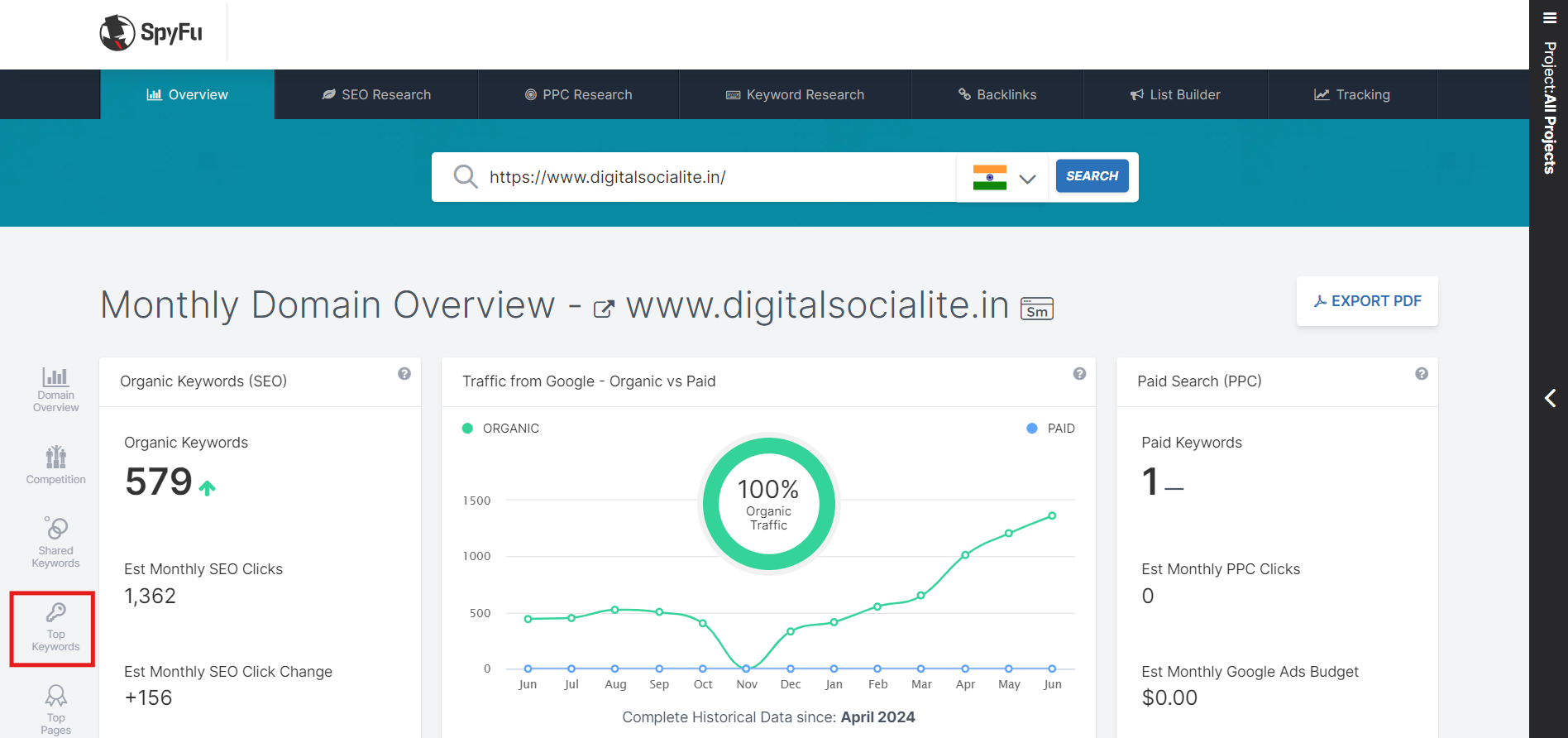
Now, click on the Top Keywords tab and click the View All Organic Keywords button.
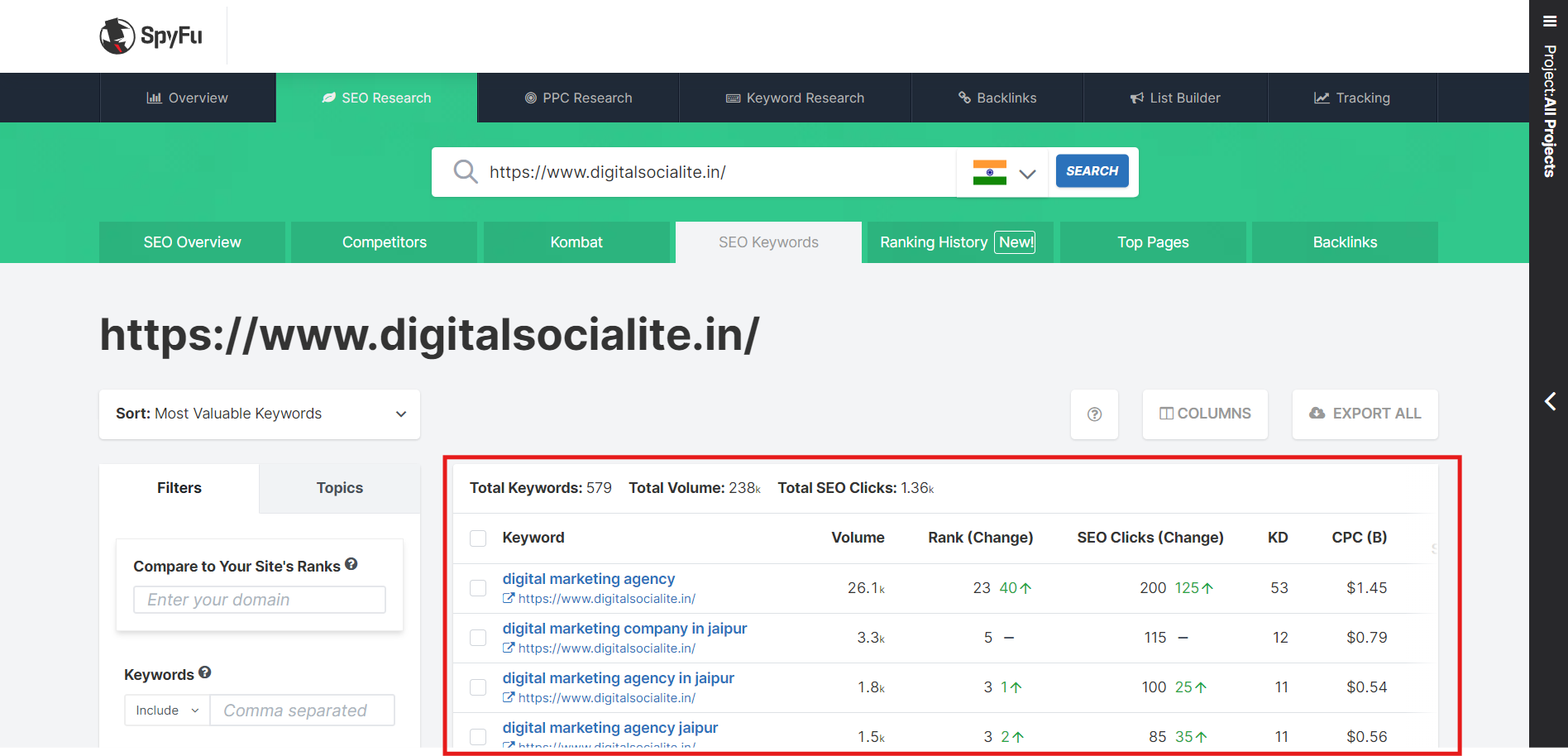
A table of all the keywords used in your analyzed website’s.
However, this free edition only shows the top 5 keywords for a domain and includes information such as search traffic, rank change, SEO clicks, and so on. To do a more thorough investigation, you’ll need to subscribe to a paid subscription.
Wrapping Up
There’s no doubt that researching competitors’ keywords is an excellent technique to optimise your own content strategy and surpass your competition in SERPs.
We are confident that by following the step-by-step steps outlined in this article, you will be able to discover high-value keywords that you had not previously considered.
Ready to begin optimising your website? Sign up now and acquire the data you need to provide excellent user experiences.
Many people in the SEO field are currently concerned about this problem. It’s unsurprising, given the media’s increasing talk and scaremongering about how AI would lead to job losses.
“Will AI replace SEO professionals?”
No, I do not think it will. However, there is tangible dread in the sector, and appropriately so.
People are cautious about making side moves into more stable jobs. But what is a stable career when artificial intelligence appears to infringe on them?
Why is there so much anxiety in the SEO community right now? We’ve heard the “SEO is dead” cries before and survived. So, why does this time seem different?
A more in-depth look at how AI is changing the field of SEO
Before the widespread adoption of AI, much SEO effort was manual and time-consuming.
Depending on your experience and skill level, optimizing a landing page could take anything from 30 minutes to several hours.
Creating a content strategy took a significant amount of time (a week or more), depending on the site, competition, search engine results pages (SERPs), etc. However, SEO professionals can complete tasks more swiftly and efficiently with AI.
Here’s how AI can help us be more efficient. However, it is essential to acknowledge AI’s limitations. A humanized approach, which includes AI where appropriate, is a win-win situation.
Why humans are required for SEO
No matter how much AI is incorporated into an SEO’s workflow, it cannot completely replace a human.
Numerous facets of our jobs necessitate making concessions, setting priorities, and changing course in reaction to occasionally subtle signals.
1. Buy-in is required for SEO strategy
Getting buy-in takes more time than developing or executing SEO activities, according to most SEOs.
An AI system could be able to think of a fix for a technical SEO issue. Even so, it won’t be able to initiate the appropriate discussions with engineers to ensure it is executed correctly. It will not be feasible to discuss the reasons for the ticket’s priority over other tickets in the queue with the team head.
2. SEO needs to factor in other priorities
To get their suggestions adopted, SEOs must learn to make concessions. A company’s resources may be under pressure from other sources; thus, the technically sound SEO solution might not be the most practical. It’s not feasible to expect AI to comprehend the politics of a corporation well enough to decide which battles to engage in.
3. SEO solutions are unique to the website
A setting with particular limitations is frequently used to develop SEO strategies. Every website will be unique, as will every vertical it operates. To create a successful plan, AI must thoroughly understand these elements. Every business will face different internal obstacles, such as a lack of subject matter expertise or a CMS. AI will have difficulty comprehending how that could affect the practicality of its suggestions.
Wrapping Up
AI will remain a vital resource for SEO professionals but won’t replace human knowledge, ingenuity, and strategic thinking.
SEO experts’ responsibilities will change over time, focusing more on managing and analyzing AI-generated data and insights and less on labor-intensive, repetitive duties that robots can currently perform with human supervision.
SEO experts will have a competitive advantage and a better future in the SEO sector if they actively study and adopt AI with a human-centric approach to hone their skill sets.
Navigating the Best Practices with Ayraphics
2023’s SEO outlook: Within the ever-changing realm of internet marketing, Search Engine Optimisation (SEO) is a vital component for companies looking to improve their online visibility. The SEO landscape is still changing as we move into 2024, making it difficult for marketers to keep up with algorithmic changes and implement best practices for the greatest outcomes. We at Ayraphics, a top marketing firm, understand how important SEO is to the success of brands. We’ll look at the most recent algorithm changes in this blog, how they affect SEO tactics, and important techniques to help brands succeed online.
Comprehending the Most Recent Algorithm Updates: Staying Current
Since search engine algorithms are always changing, SEO practitioners need to stay up to date on the latest developments. In 2023, relevance and user experience will be given more weight than ever by search engines like Google. Monitoring algorithm modifications is crucial, according to Ayraphics, in order to quickly adjust methods and preserve or raise search rankings.
How It Affects Your SEO Plan
Algorithm modifications directly impact SEO tactics. User-centric content and mobile responsiveness are more important than ever in 2023. In order to guarantee their presence in search results, brands need to adjust their SEO strategies accordingly. At Ayraphics, we provide customized solutions to optimize strategies since we recognize the delicate balance needed to manage these transformations successfully.
On-Page Optimisation: A Fundamental SEO Component
One of the mainstays of SEO is still on-page optimization. In 2023, it will be crucial to pay attention to header structure, meta tags, and keyword optimization. Using state-of-the-art techniques that are accessible at Ayraphics, Ayraphics expedites on-page optimization while guaranteeing that each piece of content complies with search engine standards.
Creating High-Quality Content
The king of the digital world is still content. Search engines will give priority to relevant, interesting, and high-quality material in 2023. In order to attract search engine attention, Ayraphics advises firms to engage in content development that speaks to their target audience and makes use of keyword research and strategic planning.
Improving the User Experience
Enhancing User Experience
User experience (UX) is a crucial component of ranking. Mobile responsiveness, easy navigation, and quick loading times must be branded’ top priorities. To evaluate and improve user experience (UX), Ayraphics uses cutting-edge methods to make sure that users have a smooth and pleasurable experience on a brand’s website.
Knowing About Backlinks: What Are They?
Understanding Backlinks: What are They?
Inbound links, often known as backlinks, are essential to SEO. They represent a trust vote from one site to another. But not every backlink is made equal. Ayraphics emphasises that relevant, high-quality backlinks are more important than just getting plenty of them.
Creating a Powerful Backlink Profile: Prioritise Quality Above Quantity 2024 SEO
The importance of having a robust backlink profile is expected to increase in 2023. Ayraphics emphasizes the value of organic link growth and the creation of a strong link network while providing thorough backlink research and building services.
Techniques for the Development of Organic Links
Building relationships with reliable websites, producing content that readers would want to share, and naturally building backlinks are all part of organic link development. Search engines view a brand as having more authority when its backlink profile is growing naturally, and Ayraphics offers techniques to help achieve this.
Mobile-Friendly Design: An Absolute Must
Mobile responsiveness is an absolute must for SEO due to the widespread use of mobile devices. Google favors mobile-friendly websites, so businesses need to adjust to this fact. By prioritizing mobile devices over other screen sizes, Ayraphics makes sure that its websites are optimized for a wide range of devices.
Putting in Place a Mobile-Friendly Strategy
Ayraphics understands the importance of having a mobile-friendly strategy. We provide brands with the knowledge and resources necessary to succeed in the mobile-first environment of 2023, from responsive design to mobile-specific SEO strategies.
In summary,
The state of SEO in 2023 necessitates a proactive and adaptable approach to algorithm modifications and best practices. Understanding the nuances of SEO, we at Ayraphics provide a full range of tools and services to support brands in their digital endeavors. Visit us for free access to industry-leading SEO tools so you can improve your SEO and raise your ranks. Additionally, look into reasonably priced backlink packages to boost your SEO game. Take advantage of the chance to improve your online visibility and bolster the performance of your business online.
A logo is the face of a brand, a visual representation that helps identify and differentiate a company from its competitors. A well-designed logo has the power to leave a lasting impression on consumers and build brand recognition. Successful logos are not just aesthetically pleasing; they possess certain characteristics that make them memorable and impactful. In this article, we will explore eight characteristics of successful logos.
What is a successful logo design?
Successful logos refer to those that effectively fulfill their purpose of representing and promoting a brand or business. These logos are memorable, recognizable, and resonate with the target audience. They encapsulate the brand’s identity, values, and personality in a visually appealing and impactful way.
A successful logo is not only aesthetically pleasing but also serves as a powerful tool for brand recognition and differentiation. It communicates the essence of the brand and creates a connection with consumers, eliciting positive emotions and associations. Successful logos have the ability to stand the test of time, remaining relevant and impactful even after years or decades. They transcend passing trends and fads, maintaining their effectiveness and recognition over the long term.
Moreover, successful logos are versatile and adaptable to various mediums and platforms. They maintain their clarity and impact whether they are displayed on a small business card or a large billboard, ensuring consistent brand representation. Furthermore, successful logos are distinct and set the brand apart from its competitors. They have a unique design that captures attention and leaves a lasting impression in the minds of consumers. A distinctive logo helps in brand recall and fosters brand loyalty.
The color palette used in a successful logo is carefully chosen to evoke the desired emotions and align with the brand’s personality. Colors play a significant role in logo design as they have the power to evoke emotions, create associations, and enhance brand recognition.
Characteristics of Successful Logos:
Simplicity: Successful logos are often simple in design. They have clean lines, minimal elements, and are easily recognizable even when scaled down or viewed from a distance. A simple logo is memorable and versatile, making it easier for consumers to remember and associate with the brand.
Memorable: A successful logo is one that sticks in the minds of consumers. It has a unique and distinct design that sets it apart from others. Memorable logos are usually simple and visually appealing, making them easier to recall when consumers think of a particular product or service.
Timelessness: Logos that stand the test of time are considered successful. A logo should be designed with a long-term perspective in mind, avoiding trends and fads that may quickly become outdated. Timeless logos remain relevant and maintain their impact even after several years or decades.
Versatility: A successful logo is versatile and adaptable. It should work well across various mediums, such as print, digital, signage, and merchandise. Whether it’s on a billboard or a social media profile picture, a logo should maintain its clarity and impact. Versatility ensures that the logo remains effective in different applications and platforms.
Relevance: A successful logo is relevant to the brand it represents. It should convey the brand’s values, personality, and core message. A well-designed logo communicates the essence of the brand to its target audience, creating a connection and establishing a positive brand perception.
Distinctiveness: Standing out in a crowded marketplace is crucial for a brand’s success, and a distinctive logo helps achieve that. Successful logos have a unique and recognizable design that sets them apart from competitors. They create a sense of identity and differentiation, helping consumers remember and choose the brand over others.
Scalability: Logos need to be scalable to various sizes without losing their impact. They should be legible and recognizable whether they are displayed on a small business card or blown up on a large billboard. Scalable logos maintain their clarity and integrity, ensuring that they remain effective across different platforms and sizes.
Appropriate Color Palette: Colors play a vital role in logo design as they evoke emotions and convey messages. Successful logos have a well-thought-out color palette that aligns with the brand’s values and target audience. The color scheme should be visually appealing, harmonious, and memorable. Whether it’s a bold and vibrant palette or a subtle and sophisticated one, the colors should enhance the overall impact of the logo.
Conclusion
Successful logos possess several key characteristics that make them memorable, impactful, and versatile. They are simple, memorable, timeless, and relevant to the brand they represent. Distinctiveness, scalability, and appropriateness of color palette are also crucial factors. Designing a successful logo requires careful consideration of these characteristics to create a visual identity that resonates with the brand’s target audience and stands the test of time.
Introduction
A logo is one of the first things people see when encountering your brand. It’s essential to get it right, so make sure to ask yourself these questions before hiring a designer:
Ask yourself why you need a logo.
The first step in choosing the perfect logo is to ask yourself why you need one. There are many reasons why businesses choose to create a new identity for their brand, but the most important thing is that it resonates with customers.
A logo should be memorable and unique—it must stand out from all other logos but still be easy for people to read and understand at first glance. You want the person who sees your logo on social media or in an advertisement for your product or service immediately know what company you represent without having any trouble deciphering its meaning (or even without having any idea what company it represents).
The next question is: What do I want from my logo?
Are you creating a corporate identity or branding for your company?
If you’re creating a corporate identity or branding for your company, the first thing to do is think about what it means to be “your” company. What values shape who you are, and how will they influence everything from products to marketing?
Corporate identities are often referred to as brands, and there’s some truth in this definition—a brand represents an image or idea (for example, Nike). Branding refers specifically to how this corporate identity manifests itself in various mediums, such as packaging design and advertising campaigns. In addition to focusing on one particular aspect of branding (such as logo design), branding can include elements like color palettes or typography styles across multiple platforms, such as mobile apps or websites.
Where will you be using the logo?
Online and offline
On your website, social media accounts, and business cards.
On your packaging and products.
In physical space (office, store).
In vehicles like trucks or delivery vans.
It would help if you also considered how to use the logo outside of the web: on paper (letterhead), in email signatures, in print ads, etc.
How big does the project need to be?
The size of your logo will depend on your business type and the medium in which it will be used. For example, a small business with an online presence might want to use something easily scalable for different sizes on different devices. A larger organization may need to consider whether or not its logo would work well at all sizes because many people will only notice it if they’re looking directly at it!
The best advice is to consider what kind of audience you want to attract; this will help determine what size is appropriate for each one!
Is this a one-time thing, or do we have other projects in mind?
Regarding logo design, there are two main types of projects: one-time projects and ongoing ones. In a one-time project, you should choose a cheaper option (like something from Fiverr) because the chances of needing another logo soon are slim. On the other hand, if you have future projects in mind and would like to invest in quality design at an affordable price, look into professional logo designers who offer both online and in-person services.
As mentioned above, if your business has been around for some time or is small enough that there aren’t many different options available but large enough that hiring someone else won’t break the bank—then maybe consider going cheap! However, if this isn’t possible due to budget constraints, consider investing more in quality rather than quantity when searching for logos for your company.
What’s the budget?
The cost of logo design depends on many factors, including the complexity of your design and the number of revisions. According to a study by LogoLounge, an online resource for logo designers, it costs between $1,000 and $10,000 to produce a new logo from scratch. If you’re looking for something more refined than that—perhaps something with a little more finesse—the price tag could go up as high as $20-30k!
The final price also depends on whether or not you want your brand’s image printed onto shirts or t-shirts (or any other medium). This is because most printing companies charge extra fees based on how much ink they need to print the image correctly (or if they even offer custom sizes). If this is important, you’ll have to research what kinds of products are available locally; otherwise, there’s nothing wrong with hiring someone who specializes in promo materials like caps or stickers instead!
Ensure the designer is familiar with your industry and knows what makes it unique.
As you’re looking for a logo designer, it’s essential to ensure they are familiar with your industry and know what makes it unique.
The first step in choosing the right designer is knowing their style. Will they work with a more traditional look or prefer something more modern? Do you want them to keep things simple or go for something more complex? In addition, ask yourself if this person will be able to help take your brand from good to great.
Logo design is essential because it is one of the first things people notice when encountering your brand, so make sure to get it right!
You must recognize the importance of a good logo. A well-designed brand identity is one of the first things people notice when they encounter your business, so make sure you get it right!
Logo design is essential because it is one of the first things people see. If your logo is memorable and easy to read, then potential customers will be able to identify who you are as a company or brand. This can lead to lost sales and unhappy customers who may not return for future purchases. For example: If someone does decide to buy from me but doesn’t know what my name is or where I work (the two most essential pieces), then whether or not they buy depends on how easily I’m able to present myself in front of them with just those two pieces (a picture).
When it comes to logo design, there are a few things you should look for. You want a logo that’s easy to read and has straightforward typography so people can quickly identify your business or brand. You also need a logo that stands out from the crowd, so people remember it—and if they do remember it, they’ll be more likely to return it for future purchases.
Conclusion
If you need help choosing a logo designer, remember it’s all about finding the right fit for your company. You’ll want someone who knows what they’re doing and has experience in your industry so that they can create something beautiful and memorable. If you have any questions about this process or would like more information on how to go about choosing one of our talented designers, feel free to contact us today!
To begin with, we must understand the purpose of a logo in order to fully comprehend what it is. An identification tool is a logo. A logo uses a mark, flag, symbol, or signature to identify a business or a product.
A logo neither sells nor describes a company. Logos exist to give your company identity, not to explain it. It is the one graphic that genuinely reflects a brand’s style and meaning. Logo maker in India helps in getting the best logo for your business
Logos are essential to the identities of both businesses and organizations. Anywhere in marketplaces or on products, a logo can help consumers identify a business. However, not every logo can draw attention to a brand for the catchy logo it is important to get in touch with the best logo designers in India. People’s feelings about a brand can only be evoked by a logo that is wonderfully crafted.
7 Reasons Why you should Invest in a Logo Design Company in India
If your company is also launching a new brand, make sure the logo is distinctive and stands out from your competitors. But more than that, your logo needs to be memorable so that people can associate it with your company. And only a logo design company in India can help with that.
1. Make the lasting first impression
Our image of someone is greatly influenced by our first impression. That also applies to brands. People are more likely to take a brand seriously when they are impressed by the visual representation of the company, such as a logo. As a result, they wish to purchase goods or services connected to that brand.
For that professionally created logo is even more important to make them notice your brand and can only be possible with the help of top logo designers in India.
2. Building trust
A compelling brand identity can grab the curiosity of a potential customer unfamiliar with your company and your products or services. As your company develops and wins more customers, it may also aid in fostering loyalty over time. Being genuine and honest is something that businesses cannot fake. Smart consumers have high expectations for the brands they choose to support.
3. Build your brand identity
A brand identity is an impression that the target market forms of your company. If your distinctive logo design stands out for its clarity and successfully communicates your business message, it works well to reinforce that impression. People frequently judge the caliber and level of service you offer by quickly scanning visuals like a logo.
While launching a new brand you need to get in touch with a logo design company in India so that they can strengthen customers’ positive views about your business with a well-designed logo.
4. Longer and lifetime
Since a professional logo maker in India creates a logo design after conducting research, you will have results that will last for a long time. So, you won’t have to worry about changing your logo in a couple of years.
Rebranding is an option occasionally when your business focus changes or you’re trying to reach a new audience, but not when your original primary design wasn’t sound enough.
5. Build customer relationships
Those who people like the most desire to stay in touch with them. They want to establish a connection with a company they deem useful. A logo design company in India can design a professional logo that assists them in doing that. Customers emotionally relate to a brand’s emblem.
As a result, developing client connections based on trust requires a unique logo design. As people begin to trust a brand, it eventually turns into a tool to turn clients into loyal ones.
6. Useful investment for future
Owners of businesses make significant investments to market their brands both online and offline, which ultimately pays off. However, if you own a small business, your expertly created logo can be a fantastic marketing tool because it will help you establish your brand identity. Therefore, there is no need for your new company to make significant early investments in various brand promotion techniques. With the help of top logo designers in India initially, you can invest in the right place for the future.
7. Stand out from the competitors
When designing your logo, qualified and the best logo designers in India consider your competitors. Many different logos from your industry and company will be taken into consideration first by the designer. Then, a thorough examination of the design components of their logos will provide insight into how to make your logo unique.
Wrap-Up
The best option for developing a brand identity that people can relate to and that will help them view the company favorably is a professional logo design. Such a logo has a distinctive design that sets it apart from those of your rivals. It can foster ties with and loyalty from customers. And creating a unique logo can be possible with the help of top logo designers in India.